Introduction to magnet fishing
There are plenty of ways to go fishing. It is one of the oldest methods of bringing a meal ashore, from standing on the shore with a 10-foot rod to wading in calm waters while whipping a fly fishing rod back and forth.
But one type of fishing has become more popular over the last few years: magnet fishing. However, there is a big difference between catching fish and magnet fishing. There is only one rule: If you manage to hook and reel in a scaled aquatic creature, you’re doing it wrong.
What to know before you go magnet fishing
The basics
While you still have a fishing line, no hooks or bait are on it. In fact, you don’t even use a fishing rod. Magnet fishing is the term for searching ponds, lakes and rivers for metallic objects with a powerful magnet attached to a durable rope.
You can either stand on the shore and fling the magnet as far as possible or take to the water on a small boat and trawl the magnet until it attaches to an object. Once it snags something, you must pull the rope to retrieve what’s attached to the magnet.
Equipment you’ll need
The two most important pieces of magnet fishing are the long, high-strength nylon rope and the magnet. But this isn’t the type of magnet you use to stick photos on your fridge. It is industrial-strength, made from several protective layers and can lift a few hundred pounds. There are different varieties of fishing magnets, and the size and strength depend on what you are hoping to find.
The rope is similar to rock climbing rope, as it has a high weight limit that would exceed anything you could find in a lake. The length of the rope isn’t crucial, but it does have to reach the bottom of the water. This is less important when magnet fishing from the shore, as the magnet will always sink to the bottom, but the length is vital when fishing from a boat.
Big finds
Plenty of videos online show all kinds of objects that lucky fishers pulled out. Especially popular around battlegrounds or areas of historical value, some treasure hunters have retrieved World War II weapons, ancient coins, medals and other valuable items.
But magnet fishing comes with a few risks, too. Not only are the magnets powerful enough to crush your fingers, you might bring something to the surface that can be deadly. This happens regularly in areas that saw heavy WWII fighting, as German magnet fishers regularly bring up live grenades, loaded weapons and rounds of ammunition.
Most common finds
Before you get into magnet fishing, remember that you’re not going to get filthy rich on your first try — or ever. It takes a lot of dedication and knowing where to hunt, and you might never find anything valuable.
For all the fantastic objects, there are thousands of mundane pickups. The most common objects retrieved from water include nuts and bolts, screws and nails, cutlery and tools. Occasionally, you might find scrap pipes or modern coins if the magnetic content is high enough.
In an ironic twist, the chances are good that you bring in discarded fishing tackle, such as hooks and lures.
What you need to buy for magnet fishing
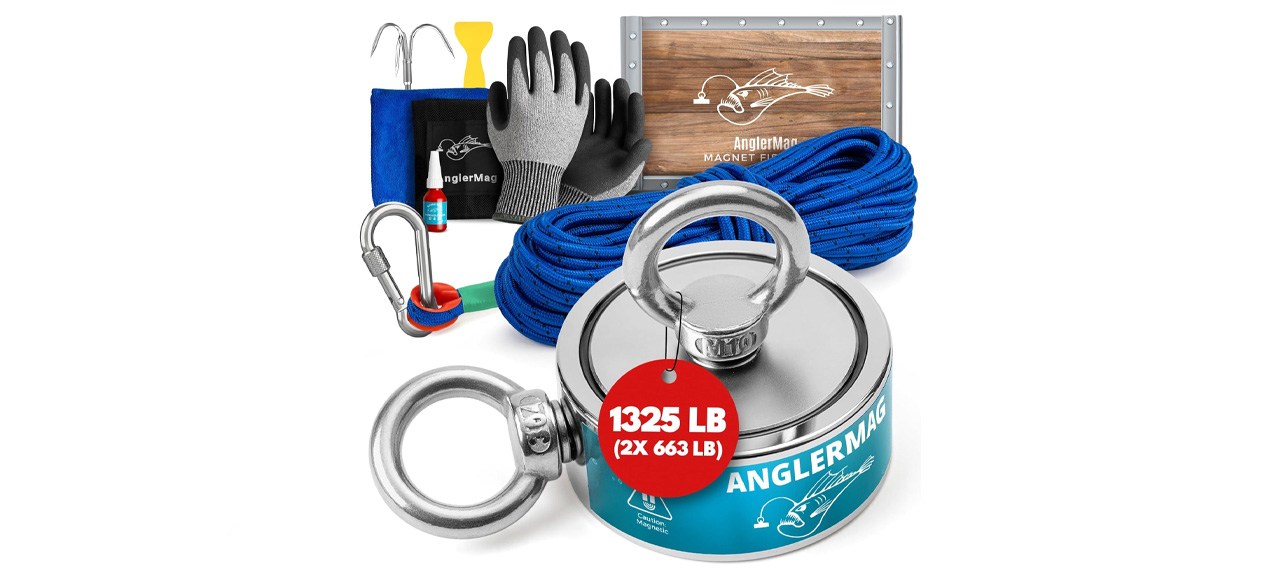
Perfect if you are just getting started, this kit contains a 2.9-inch magnet with a pull force of 1,250 pounds and a 60-foot nylon paracord rope. It also comes with a three-prong hook to bring nonmagnetic items to the surface, cut-resistant safety gloves, a plastic scraper and a microfiber cloth.
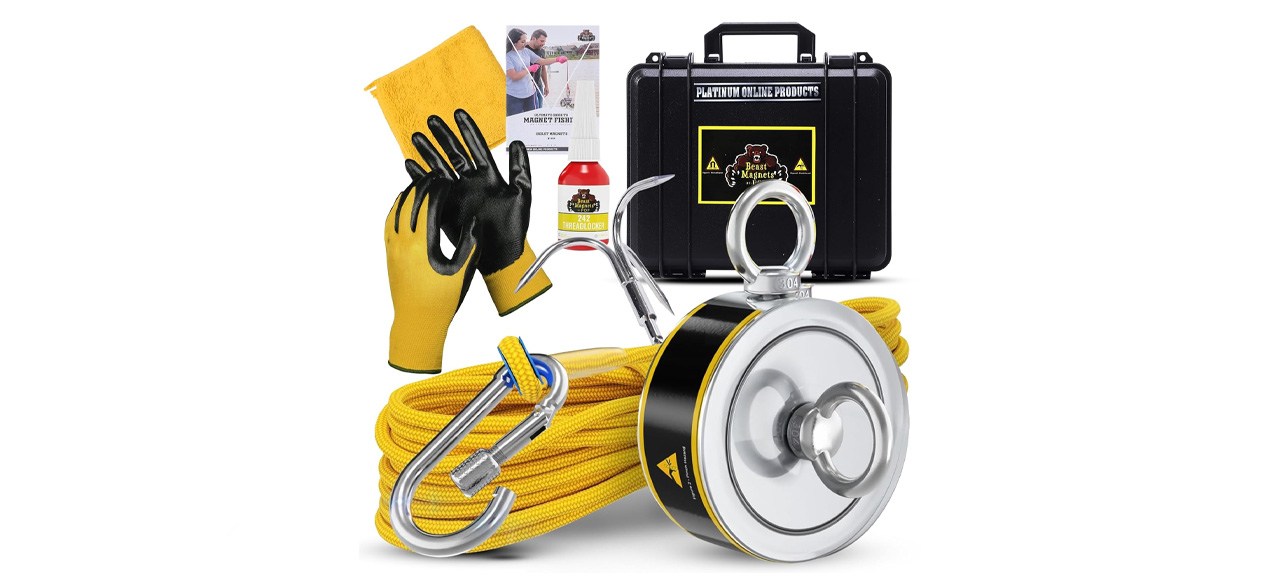
Platinum Complete Magnet Fishing Kit
This complete kit contains a double-sided 3-inch magnet with a maximum pull force of 1,320 pounds and a 65-foot nylon rope. It also comes with ThreadLocker glue, a microfiber cloth, a three-prong hook, cut-resistant safety gloves and a robust plastic carry case.
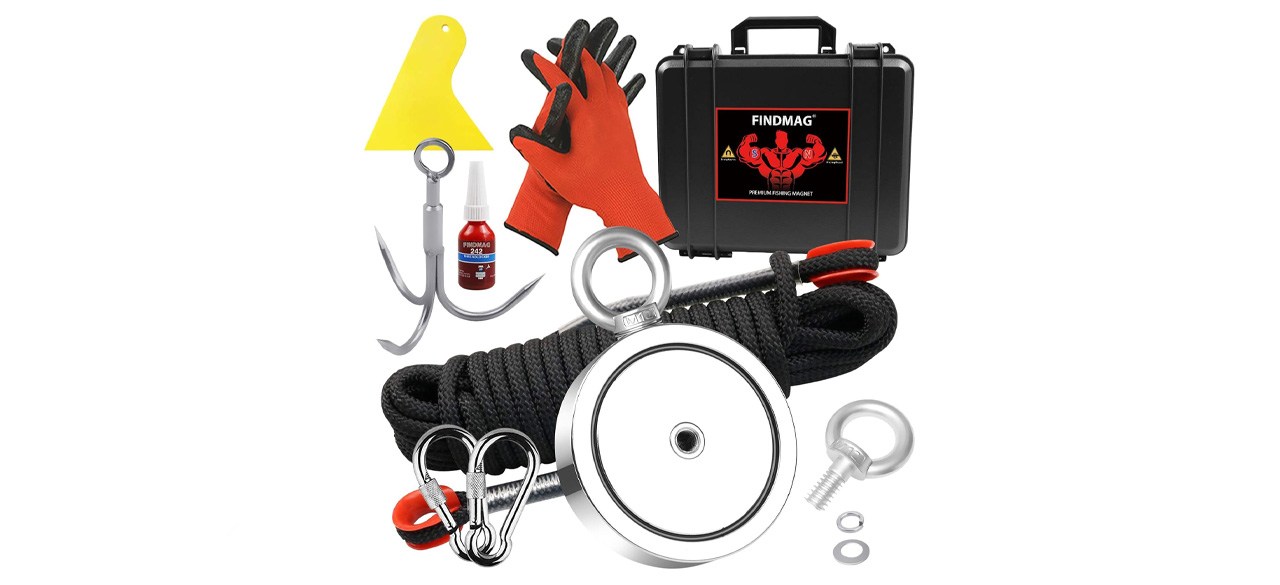
This kit is the ultimate for serious magnet fishermen. It contains the strongest 4.5-inch diameter and 1.25-inch thick magnet, with a pull force of 2,625 pounds. It includes a 50-foot nylon rope, safety gloves, a three-prong hook and a plastic carry case.
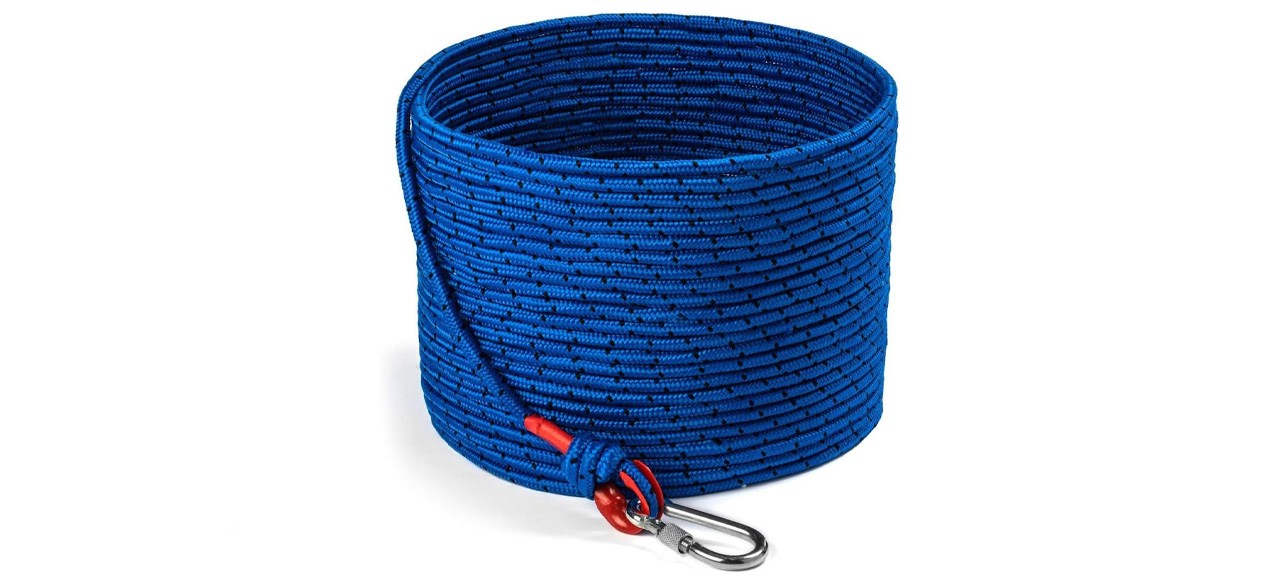
Loreso Strong Magnet Fishing Rope
This is an excellent option if you already have a powerful magnet but need a longer rope. The 65-foot heavy-duty line has a maximum pull force of 1,200 pounds, a reinforced polyester line on the inside, and is a third of an inch thick.
Prices listed reflect time and date of publication and are subject to change.
Check out our Daily Deals for the best products at the best prices and sign up here to receive the BestReviews weekly newsletter full of shopping inspo and sales.
BestReviews spends thousands of hours researching, analyzing and testing products to recommend the best picks for most consumers. BestReviews and its newspaper partners may earn a commission if you purchase a product through one of our links.





